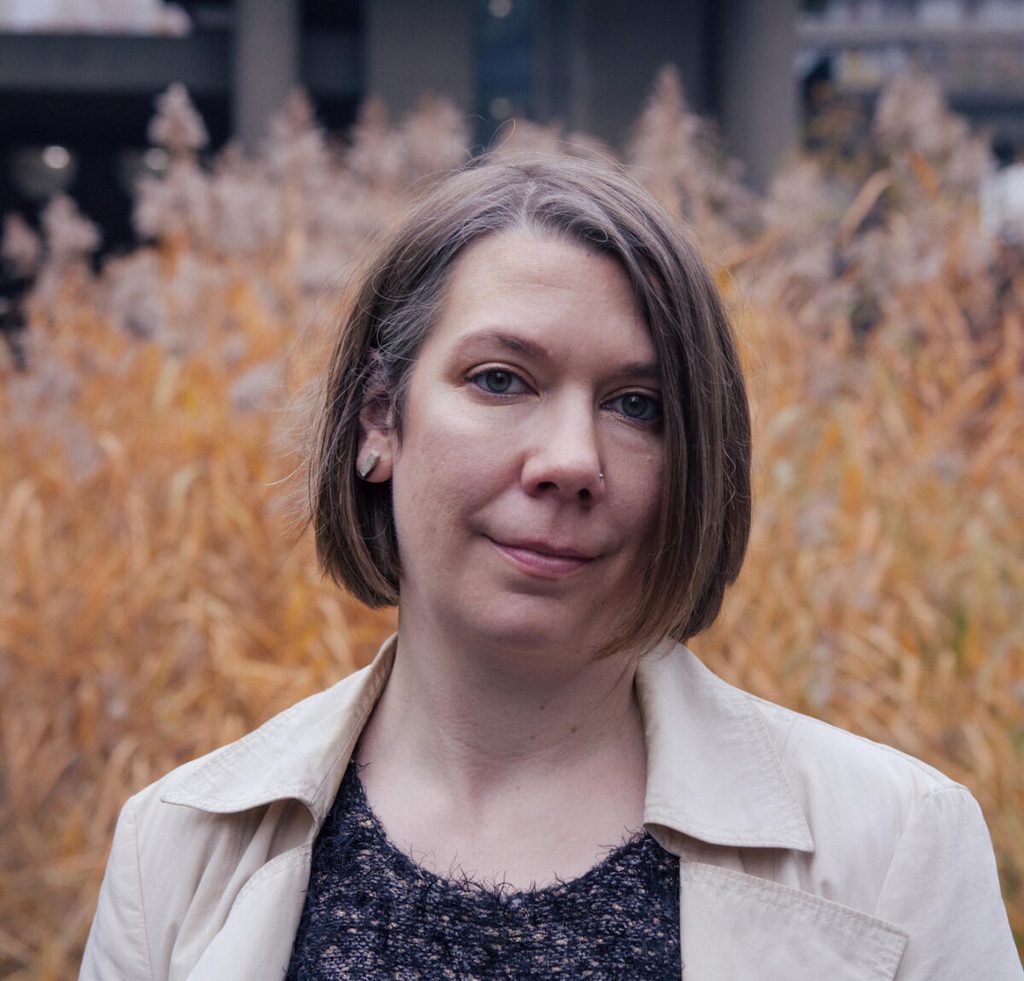
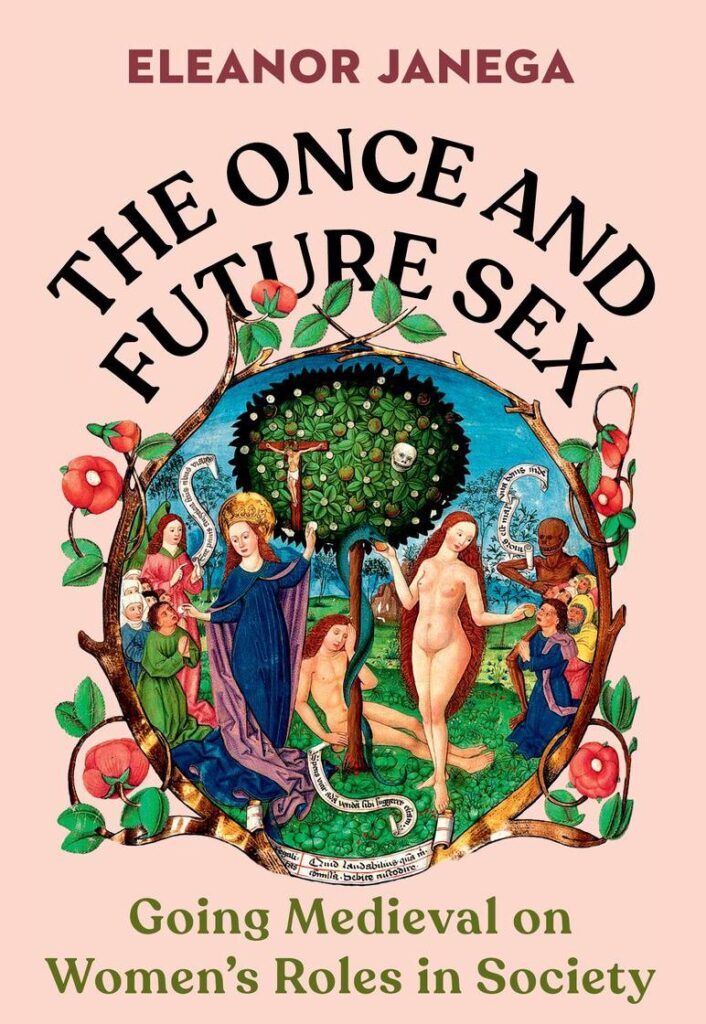
I convinced my professor, Dr. Cantwell, to change my subject or analysis, so thank you for making this medievalist nerd’s heart a little happier in being able to talk about one of my favourite historians, Dr. Eleanor Janega! No offense to other historians…
When I first encountered Eleanor Janega, I did not find her through an academic journal or a university website. I discovered her through the History Hit YouTube channel and her many videos about the Middle Ages, be it long-form documentary videos or sit-downs discussing different topics relating to the period. Specifically, it was the “Medieval Fashion: What Did Medieval Women Wear” video (which you should watch, when you get a chance) and her ranking pieces of clothing from the period on a Tier List that helped me discover her. From there, I was instantly hooked.
What initially caught my attention was her humour and the accessibility of her approach to medieval history. Rather than presenting the Middle Ages as a distant or completely unfamiliar world, as is often done, Janega makes medieval people and their experiences feel recognizable to a modern audience in a “they were just like me fr” sort of way, using what we would describe as the ‘lay’ language when discussing different aspects of the medieval period, cussing and all! It reminded me of myself when I’ve gone on and on to friends and family (most often without choice) about what I was learning or researching into. Her work shows how history of any kind can be communicated outside of traditional academic settings while still being grounded in scholarly knowledge. Because of this, I was interested in looking more closely at how Janega has developed her digital presence and how her online persona connects to her career as a medieval historian.
With that, a quick dive into Janega’s CV. Her work focuses particularly on the social and cultural aspects of the medieval world, including gender, sexuality, and everyday life. Crazily enough, she was also an undergraduate history student at Loyola University Chicago! (How has this not been talked about more?) Anyway, she is currently teaching at the London School of Economics, where her institutional profile presents her primarily through her academic identity and research in medieval sexuality and other social dynamics happening ‘on the ground’. Her professional website similarly provides information about her academic and professional work with widgets linking to all that she is up to. Looking at these profiles, it is easy to see what Kim Barbour and David Marshall’s The Academic Online: Constructing Persona through the World Wide Web describes as the formal or static self, which presents an academic through professional qualifications, research interests, employment, and accomplishments. All the usuals of an academic’s profile. Janega’s digital presence, however, goes beyond this formal academic identity.
She has become particularly recognizable through public history, including her work with History Hit and her Going Medieval podcast. Through video, podcasts, writing, and social media like Instagram, she communicates medieval history to audiences far beyond academia. This makes her digital presence particularly interesting because she does not simply use social media to advertise her academic work, be it book releases or more typically ‘professional’ means of sharing about the middle ages. Instead, digital media has become part of the way she actually practices her public history.
I think Janega fits most closely as a nice combination of the comprehensive or networked and teaching self, as much of her personal life goes into her public, academic one, be it her Instagram, sitting alongside historian Dan Snow on HistoryHit or her Going Medieval blog, which shows her casual humour, silly medieval content, and even an appearance in booty shorts, among other posts. Rather than maintaining the rigid image of what an academic historian might be expected to look or act, Janega allows her personality and personal presentation to become part of her public academic identity, which is something I hadn’t seen before. This reflects Barbour and Marshall’s comprehensive self, where professional and personal identities overlap online and even blur. The public self involves using online platforms to share ideas, encourage discussion, and develop networks beyond the boundaries of an academic institution. The teaching itself similarly extends education beyond the traditional classroom by using digital media to reach students and other audiences. In my eyes. Janega’s work combines these two perfectly. Her willingness to be funny, informal, and unapologetically herself does not take away from her scholarship at all. Instead, it makes medieval history feel even more accessible and human, as her videos, blog posts and podcast episodes can teach audiences about medieval history and do so through formats that are conversational, entertaining, and designed for people who may not have any formal background in medieval studies whatsoever. It’s like talking to a friend, but one with a PhD.
This is especially seen in how she uses humour in her work. Her content does not present medieval history as something that only specialists can understand. Instead, that humour creates an entry point into subjects that might otherwise seem distant or intimidating. Holy Grail by Monty Python is very reminiscent of this, as one of their own, Terry Jones was himself a trained medievalist! Side tangents aside, her approach also emphasizes the humanity of medieval people, like any history should. Medieval people are not shown as these illusive, almost untouchable or even otherworldly figures who lived hundreds of years ago. Instead, they had relationships, desires, conflicts, anxieties, beliefs, and everyday experiences just like we do.
Wow, who would’ve thought!
With that said, making the medieval relatable does not mean suggesting that medieval people were exactly like modern people, because of course they weren’t. They had their own contexts and experiences they were dealing with that we as historians now need to contextualize and unravel. However, Janega’s approach creates an important link between the historical past and the audience watching or listening to her.
Her use of different forms of media is also significant. Her institutional profile functions differently from her public-facing work. A university profile provides a concise description of her academic qualifications and research, while a blog, YouTube video or podcast allows her personality and humor to become part of the presentation. As a result, the different platforms can showcase different aspects of the same professional identity. Rather than having a single online persona, Janega has a network of overlapping identities: academic, medieval historian, educator, writer, podcaster, and general public personality.
With that, Janega’s current public identity is much broader than what would normally be visible through a traditional academic profile. She pulls out all the stops, where I even begin to question how she is not completely and utterly exhausted… She maintains a blog and Instagram presence, appears on YouTube channels, produces podcasts, writes books, and even maintains a Patreon page where one can pay to get extra educational content. Her work demonstrates the increasing possibilities of the online world for scholars to communicate directly with audiences that are not just medievalist colleagues or students. Instead of relying solely on academic publications or classroom teaching, a historian can now reach people through the many platforms available online. In Janega’s case, these platforms have helped make medieval history be part of or relate to the modern day.
Her digital presence also illustrates one of the major benefits of the public and teaching selves discussed in our reading: scholars can reach audiences outside of their immediate academic institutions. The reading describes the public self as a way for academics to share ideas and build communities across different geographic and institutional boundaries, while the teaching self can extend learning beyond academia. In Janega’s case, an audience member does not need to be a medieval history student, or even an academic, to find and understand her work.
This is ultimately what makes Janega’s digital footprint particularly useful to me and potentially for many others. I encountered her scholarship because she was communicating through a medium I was already using for entertainment and general interest. I was not looking for an academic article about medieval history when I found her videos. Her digital presence instead brought the scholarship to me. That experience demonstrates how social media and other digital platforms can change the relationship between scholars and their audiences. A scholar’s online presence can become an open invitation into a subject and making it more accessible and digestible rather than simply a place to display professional accomplishments and calling it a day.
Janega’s career therefore provides an interesting example of how an academic identity can move between the formal, public, and teaching selves. Her London School of Economics profile, for example. establishes her scholarly credentials, while her website, podcasts, videos, and other public-facing work allow her to express herself and communicate that expertise in a more informal and accessible way for wider audiences to enjoy. What I find most compelling about her digital persona is that she doesn’t make accessibility and scholarship opposites or separate from one another. Instead, humour and relatability become tools for bringing historical scholarship to people who might otherwise never find it. For my own future work in history–be it archives, libraries or any other GLAM or public history-related sector–Janega’s digital presence demonstrates the value of thinking not only about what information we communicate, but also about how we make people want to or see how they can engage with it.